Unnamed Drainage Canyoneering Canyoning Caving descenso de barrancos Barranquismo
|
| Rating: |
Log in to rateLog in to rateLog in to rateLog in to rateLog in to rate 4.0 (4 ratings) |
|
|
| |
Raps:4-5, max ↨115ft No Shuttle:None |
|---|
| Location: |
APPROXIMATE LOCATION! |
|---|
|  Search nearby locations] |
|---|
| Condition Reports: |
13 Dec 2025
"Great day with good flow. All the anchors are in good shape.
(log in to submit report)
|
|---|
Weather: |
|
|---|
| Best season: |
Jan-Mar | winter | | spring | | summer | | fall |
|---|
| Dec | Jan | Feb | | Mar | Apr | May | | Jun | Jul | Aug | | Sep | Oct | Nov |
|
| Regions: |
|
topo
GPS data automatically extracted from [], please visit their site for more detailed information.
Automatic GPS data extraction NOT allowed, please visit [] to download GPX.
Reference photos
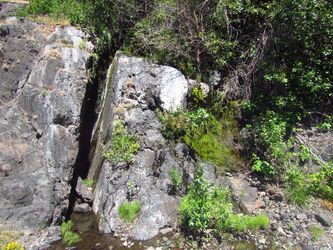
4 Jul 2017:
Low. Not as fun, but should be safe even for beginners (class B/C = a3). Did not run.
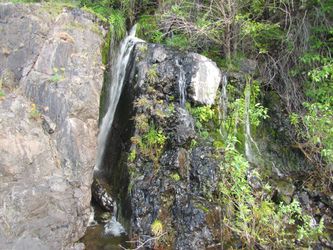
6 May 2018:
Moderate-Low. A bit low, still fun but not very challenging (class C1- = a4-).
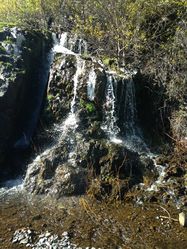
21 Apr 2017:
Moderate. Challenging but not dangerous for intermediate canyoneers (class C1 = a4).
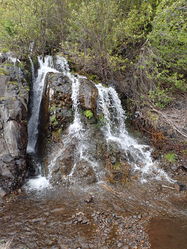
29 Apr 2017:
Moderate-High. A bit high, quite challenging but not too dangerous (class C1+ = a4+).
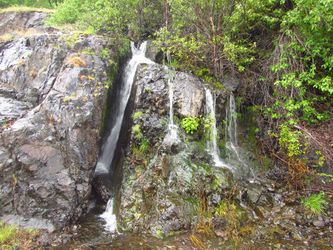
14 May 2017:
Moderate-High. A bit high, quite challenging but not too dangerous (class C1+ = a4+).
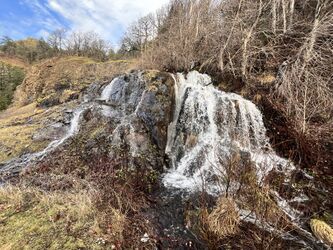
3 Feb 2024:
Moderate-High. A bit high, quite challenging but not too dangerous (class C1+ = a4+).
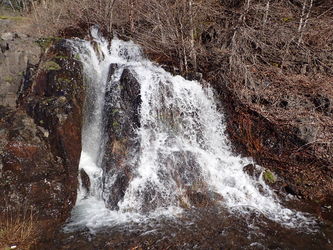
19 Mar 2017:
Extreme. Extremely dangerous high water, may be unsafe even for experts (class C4 = a7).
These reference pictures are used in the
Waterflow analysis to predict current conditions. More reference pictures will produce a more reliable prediction.
(log in to submit reference picture) | Welcome! Canyons in the Pacific Northwest can be different from those you might be used to. Be ready for unlinked bolts, retrievable traverse lines, and challenging aquatic environments. For more on local practices, and the best way to get started in the region, check out the WCC Safety page.
- Unlinked Bolts - groups should be comfortable rigging unlinked bolts, either temporarily linking them for all but the last person, or using a passive redundancy method. Most importantly, if you find two bolts side by side that are unlinked, do not add webbing to them. Linking bolts designed to be unlinked will likely cause damage during seasonal floods.
- Traverse Lines - many canyons are rigged to allow traverse line access to an exposed anchor station. This should be done using self-belay or team belay techniques. Do not leave fixed lines in the canyons.
- Challenging Environments - the highly aquatic nature of PNW canyons can surprise many. Cold temperatures, slippery rocks, loud waterfalls, and strong currents all lead to unexpected problems. Do not underestimate the need for strong team work and technical proficiency. Belays are frequently not possible. Unattended gear will sink or float away. Sliding and jumping is the cause of most major injuries, so it's critical to effectively communicating water depth & submerged hazards.
|
Introduction
Unnamed seasonal drainage added here for checking flow.
Approach
Descent
- R1: 20ft
- R2: 60ft
- R3: 100ft
- R4: 115ft - exactly half of a 70 meter rope.
- R5: 50ft
While it's possible to link R4 & R5 into a 190ft rappel, be aware: several teams have core shot their ropes doing so. It's better to break up long rappels into a series of shorter ones.
Exit
Red tape
Be aware: the entire creek from R2 down is on private land. Do your best to keep a low profile and maintain a rigorous Leave No Trace.
Beta sites
Trip reports and media
Background

 Weather forecast
 Waterflow


